Front seatsFront seatsThe seats can be adjusted (longitudinally, vertically, etc.). Adjust the seat to ensure
the correct driving posture.Seats
AdjustmentFront seats
AdjustmentAdjustment procedureSwitches
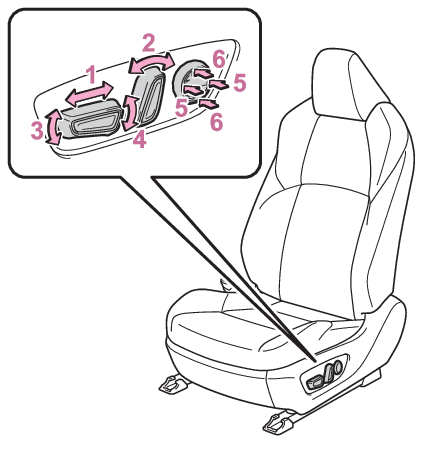
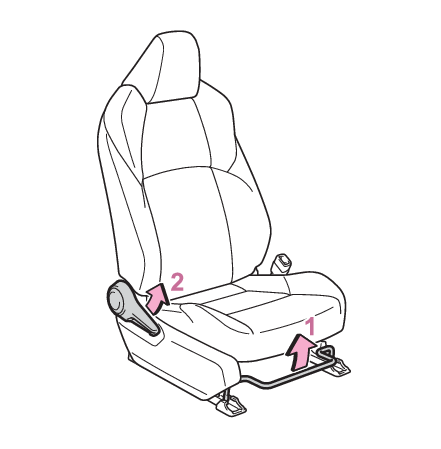
Seat adjustmentPower seatSeat position adjustment switchSeatback angle adjustment switchSeat cushion (front) angle adjustment switch (for driver’s side)Vertical height adjustment switch (for driver’s side)Lumbar support adjustment switch (for driver’s side)Pelvic support adjustment (if equipped for driver’s side)Manual seatSeat position adjustment leverSeatback angle adjustment leverNote:When adjusting the seatTake care when adjusting the seat so that the head restraint does not touch the ceiling.Power easy access system (if equipped)The driver’s seat and steering wheel move in accordance with power switch mode and
the driver’s seat belt condition. (Enabling easier driver entry and exit (power easy access system))Warning:Seats
Adjustment precautionsWhen adjusting the seat positionTake care when adjusting the seat position to ensure that other passengers are not
injured by the moving seat.Do not put your hands under the seat or near the moving parts to avoid injury.Fingers
or hands may become jammed in the seat mechanism.Make sure to leave enough space around the feet so they do not get stuck.Manual seat only: After adjusting the seat, make sure that the seat is locked in position.Seat adjustmentTo reduce the risk of sliding under the lap belt during a collision, do not recline
the seat more than necessary.If the seat is too reclined, the lap belt may slide past
the hips and apply restraint forces directly to the abdomen, or your neck may contact
the shoulder belt, increasing the risk of death or serious injury in the event of
an accident.Adjustments should not be made while driving as the seat may unexpectedly
move and cause the driver to lose control of the vehicle.