A/CHeaters
Automatic air conditioning systemAutomatic air conditioning systemAir conditioning system
Automatic air conditioning systemA/C
Automatic air conditioning systemAutomatic air conditioning systemAir outlets and fan speed are automatically adjusted according to the temperature
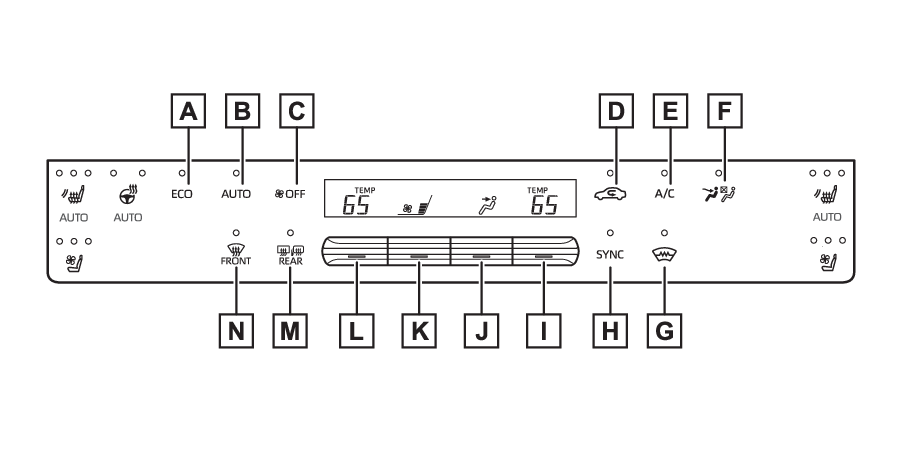
setting.Air conditioning controlsEco air conditioning modeALL AUTO (ECO) switch (ALL AUTO (ECO) control)“
OFF” switchOutside/recirculated air mode switch“
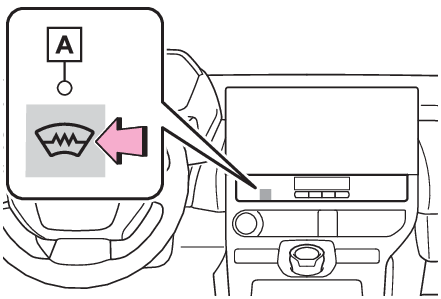
A/C” switchFront seat concentrated airflow mode (S-FLOW) switchWindshield wiper de-icer switch (if equipped)“
SYNC” switchRight-hand side temperature control switchAirflow mode control switchFan speed control switchLeft-hand side temperature control switchRear window and outside rear view mirror defogger switchWindshield defogger switchAdjusting the temperature settingOperate the temperature control switch upwards to increase the temperature and downwards
to decrease the temperature.If “
A/C” is not pressed, the system will blow ambient temperature air or heated air.Setting the fan speedOperate the fan speed control switch upwards to increase the fan speed and downwards
to decrease the fan speed.Press the “
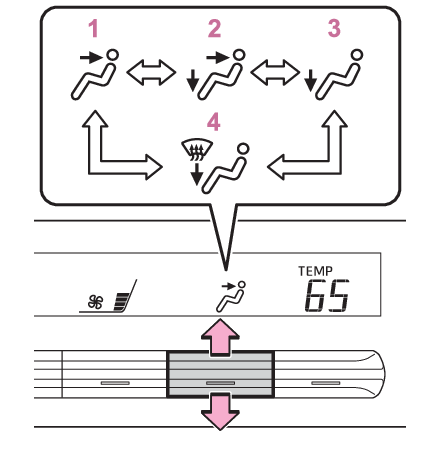
OFF” switch to turn off the fan.Change the airflow modeOperate the airflow mode control switch upwards or downwards.The mode changes as follows each time the switch is operated.Air flows to the upper body.Air flows to the upper body and feet.Air flows to the feet.Air flows to the feet and the windshield defogger operates.Switching between outside air and recirculated air modesPress the outside/recirculated air mode switch.The mode switches between outside air mode (the indicator is off) and recirculated
air mode (the indicator is on) each time the switch is pressed.Set cooling and dehumidification functionPress the “
A/C” switch.When the function is on, the indicator illuminates on the “
A/C” switch.Windshield defoggerSwitches
Windshield defogger switchDefogger
WindshieldDefogging the windshieldDefoggers are used to defog the windshield and front side windows.Press the windshield defogger switch.Set the outside/recirculated air mode switch to outside air mode if the recirculated
air mode is used. (It may switch automatically.)To defog the windshield and the side windows quickly, turn the air flow and temperature
up.To return to the previous mode, press the windshield defogger switch again when the
windshield is defogged.When the windshield defogger switch is on, the indicator illuminates on the windshield
defogger switch.Windows
Rear window defoggerSwitches
Rear window and outside rear view mirror defoggers switchSide mirrors
Outside rear view mirror defoggersSide mirrors
HeatersRear window defoggerOutside rear view mirrors
Outside rear view mirror defoggersMirrors
Outside rear view mirror defoggersHeaters
Outside rear view mirrorsDefogger
Outside rear view mirrorsDefogger
Rear windowDefogging the rear window and outside rear view mirrorsDefoggers are used to defog the rear window and to remove raindrops, dew and frost
from the outside rear view mirrors.Press the rear window and outside rear view mirror defogger switch.The defoggers will automatically turn off after a period of time.Windshield wiper de-icer (if equipped)This feature is used to prevent ice from building up on the windshield and wiper blades.Press the windshield wiper de-icer switch.The indicator
comes on when the windshield wiper de-icer is on.The windshield wiper de-icer will automatically turn off after a period of time.Note:Fogging up of the windowsThe windows will easily fog up when the humidity in the vehicle is high. Turning “
A/C” switch on will dehumidify the air from the outlets and defog the windshield effectively.If you turn “
A/C” switch off, the windows may fog up more easily.The windows may fog up if the recirculated air mode is used.When driving on dusty roadsClose all windows. If dust thrown up by the vehicle is still drawn into the vehicle
after closing the windows, it is recommended that the air intake mode be set to outside
air mode and the fan speed to any setting except off.Outside/recirculated air modeSetting to the recirculated air mode temporarily is recommended in preventing dirty
air from entering the vehicle interior and helping to cool the vehicle when the outside
air temperature is high.Outside/recirculated air mode may automatically switch depending on the temperature
setting or the inside temperature.When the outside temperature exceeds 75°F (24°C) and the air conditioning system is
onIn order to reduce the air conditioning power consumption, the air conditioning system
may switch to recirculated air mode automatically. This may also reduce electricity
consumption.Recirculated air mode is selected as a default mode when the power switch is turned
to ON.It is possible to switch to outside air mode at any time by pressing the outside/recirculated
air mode switch.When the outside temperature falls to nearly 32°F (0°C)The dehumidification function may not operate even when “
A/C” switch is pressed.Operation of the air conditioning system in the eco air conditioning modeIn the eco air conditioning mode, the air conditioning system is controlled as follows
to prioritize power consumption efficiency:EV system and compressor operation controlled to restrict heating/cooling capacityFan speed restricted when automatic mode is selectedThe eco air conditioning mode can be turned on and off using the air conditioning
control switch. (Air conditioning controls)To improve air conditioning performance, perform the following operations:Adjust the fan speedTurn off eco air conditioning mode (Air conditioning controls)Ventilation and air conditioning odorsTo let fresh air in, set the air conditioning system to the outside air mode.During use, various odors from inside and outside the vehicle may enter into and accumulate
in the air conditioning system. This may then cause odor to be emitted from the vents.To reduce potential odors from occurring:It is recommended that the air conditioning system be set to outside air mode prior
to turning the vehicle off.The start timing of the blower may be delayed for a short period of time immediately
after the air conditioning system is started in automatic mode.When parking, the system automatically switches to outside air mode to encourage better
air circulation throughout the vehicle, helping to reduce odors that occur when starting
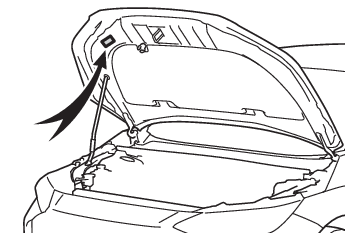
the vehicle.Air conditioning filterAir conditioning filterAir conditioning system refrigerantA label regarding the refrigerant of the air conditioning system is attached to the
hood at the location shown in the following illustration.The meaning of each symbol on the label are as follows:
Caution
Air conditioning system
Air conditioning system lubricant type
Requires registered technician to service air conditioning system
Flammable refrigerant
Noise from air conditioning systemApproximately 90 seconds after the power switch turned to OFF, you may hear sound
coming from air conditioning system. This is the sound of a air conditioning system
initialize and, it does not indicate a malfunction.CustomizationSome functions can be customized.(Customizable features: Automatic air conditioning system)Warning:To prevent the windshield from fogging upDo not use the windshield defogger switch during cool air operation in extremely humid
weather.The difference between the temperature of the outside air and that of the
windshield can cause the outer surface of the windshield to fog up, blocking your
vision.To prevent burnsDo not touch the rear view mirror surfaces when the outside rear view mirror defoggers
are on.Vehicles with windshield wiper de-icer: Do not touch the glass at lower part of the
windshield or to the side of the front pillars when the windshield wiper de-icer is
on.Notice:To prevent 12-volt battery dischargeDo not leave the air conditioning system on longer than necessary when the EV system
is off.When repairing/replacing parts of the air conditioning systemHave repair/replacement performed by your Toyota dealer. When a part of the air conditioning
system, such as the evaporator, is to be replaced, it must be replaced with a new
one.Using automatic modePress the ALL AUTO (ECO) switch. (ALL AUTO (ECO) control)The dehumidification function begins to operate. Air outlets and fan speed are automatically
adjusted according to the temperature setting and humidity.Adjust the temperature setting.To stop the operation, press the “
OFF” switch.If the fan speed setting or air flow modes are operated, the automatic mode indicator
goes off. However, automatic mode for functions other than that operated is maintained.Note:Using automatic modeFan speed is adjusted automatically according to the temperature setting and the ambient
conditions.Therefore, the fan may stop for a while until warm or cool air is ready to flow immediately
after the automatic mode switch is pressed.“SYNC” modeA/C
“SYNC”modeAir conditioning system
“SYNC” modeAutomatic air conditioning system
“SYNC” modeAdjusting the temperature for driver and front passenger seats separately (“
SYNC” mode)To turn on the “
SYNC” mode, perform any of the following procedures:Press the “
SYNC” mode switch.Adjust the front passenger’s side temperature setting.The indicator comes on when the “
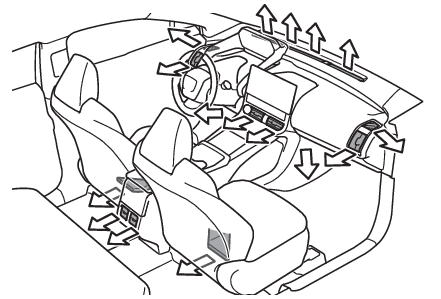
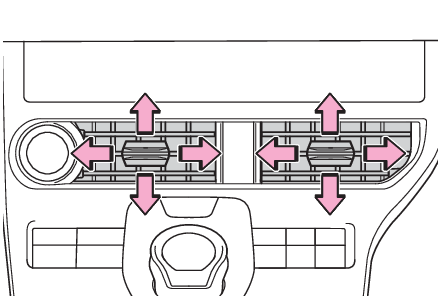
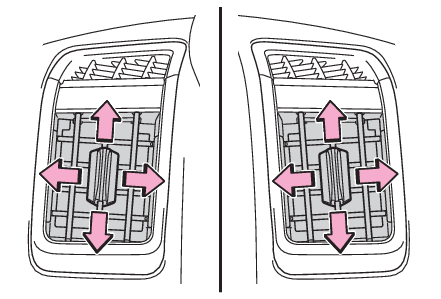
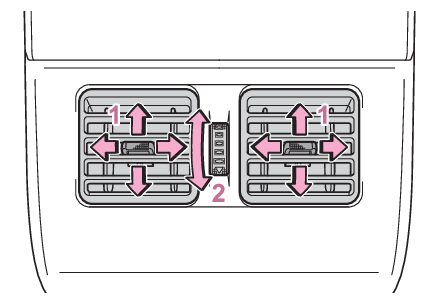
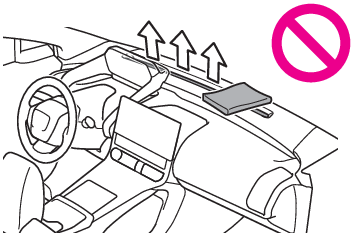
SYNC” mode is on.Air outlet layout and operationsLocation of air outletsThe air outlets and air volume change according to the selected air flow mode.Adjusting the air flow direction and opening/closing the air outletsFrontDirect air flow to the left or right, up or downMove the knob fully to the outside to close the vent.Direct air flow to the left or right, up or downMove the knob fully downward to close the vent.RearDirect air flow to the left or right, up or downTurn the knob to open or close the ventWarning:To not interrupt the windshield defogger from operatingDo not place anything on the instrument panel which may cover the air outlets. Otherwise,
air flow may be obstructed, preventing the windshield defoggers from defogging.Front seat concentrated airflow mode (S-FLOW)Automatic air conditioning system
Front seat concentrated airflow mode (S-FLOW)Air conditioning system
Front seat concentrated airflow mode (S-FLOW)A/C
Front seat concentrated airflow mode (S-FLOW)Front seat concentrated airflow mode (S-FLOW)This function automatically controls the air conditioning airflow so that priority
is given to the front seats. Unnecessary air conditioning is suppressed, contributing
to increased electricity consumption efficiency.Front seat concentrated airflow mode operates in the following situations.No passengers are detected in the rear seatsThe windshield defogger is not operatingWhile operating,
illuminates.Manually turning front seat concentrated airflow mode on/offIn front seat concentrated airflow mode, directing airflow to the front seats only
and to all seats can be switched via switch operation. When the mode has been switched
manually, automatic airflow control stops operating.Press
on the air conditioning operation panel and switch the airflow.Indicator illuminated: Airflow to the front seats onlyIndicator off: Airflow to all the seatsNote:Operation of automatic airflow controlIn order to maintain a comfortable interior, airflow may be directed to seats without
passengers immediately after the EV system is started and at other times depending
on the outside temperature.After the EV system is started, if passengers move around inside or enter/exit the
vehicle, the system cannot accurately detect the presence of passengers and automatic
airflow control will not operate.Operation of manual airflow controlEven if the function is manually switched to directing airflow to only the front seats,
when a rear seat is occupied, it may automatically direct airflow to all seats.To return to automatic airflow controlWith the indicator off, turn the power switch off.After 60 minutes or more elapse, turn the power switch to ON.