Warning labelTraction battery (hybrid battery)
LocationTraction battery (hybrid battery)Service plugPower control unitHybrid system
Hybrid system precautionsHybrid system
High voltage componentsHybrid battery (traction battery)
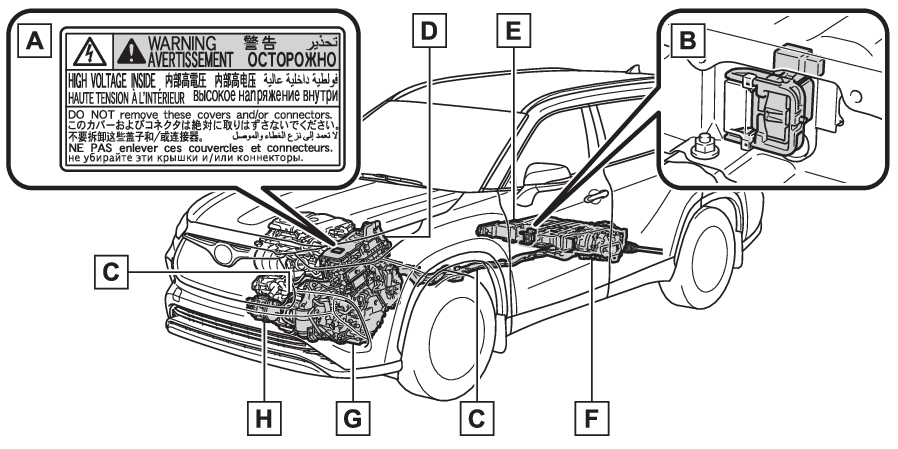
LocationHigh-voltage componentsBattery (traction battery)Hybrid system precautionsTake care when handling the hybrid system, as it is a high voltage system (about 650
V at maximum) as well as contains parts that become extremely hot when the hybrid
system is operating. Obey the warning labels attached to the vehicle.System componentsThe illustration is an example for explanation and may differ from the actual item.Warning labelService plugHigh voltage cables (orange)Power control unitHybrid battery (traction battery)Rear electric motor (traction motor)*Front electric motor (traction motor)Air conditioning compressor*AWD models onlyNote:Running out of fuelWhen the vehicle has run out of fuel and the hybrid system cannot be started, refuel
the vehicle with at least enough gasoline to make the low fuel level warning light
(Low fuel level warning light) go off. If there is only a small amount of fuel, the hybrid system may not be able
to start. (The standard amount of fuel is about 2.9 gal. [11.05 L, 2.4 Imp. gal.],
when the vehicle is on a level surface. This value may vary when the vehicle is on
a slope. Add extra fuel when the vehicle is inclined.)Electromagnetic wavesHigh voltage parts and cables on hybrid vehicles incorporate electromagnetic shielding,
and therefore emit approximately the same amount of electromagnetic waves as conventional
gasoline powered vehicles or home electronic appliances.Your vehicle may cause sound interference in some third party-produced radio parts.Hybrid battery (traction battery)The hybrid battery (traction battery) has a limited service life. The lifespan of
the hybrid battery (traction battery) can change in accordance with driving style
and driving conditions.Warning:High voltage precautionsThis vehicle has high voltage DC and AC systems as well as a 12-volt system. DC and
AC high voltage is very dangerous and can cause severe burns and electric shock that
may result in death or serious injury.Never touch, disassemble, remove or replace the high voltage parts, cables or their
connectors.The hybrid system will become hot after starting as the system uses high voltage.
Be careful of both the high voltage and the high temperature, and always obey the
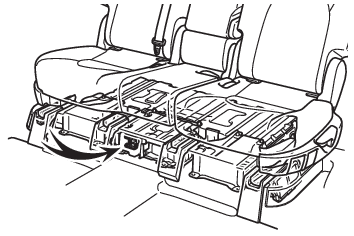
warning labels attached to the vehicle.Never try to open the service plug access hole located under the rear seat. The service
plug is used only when the vehicle is serviced and is subject to high voltage.Road accident cautionsObserve the following precautions to reduce the risk of death or serious injury:Pull your vehicle off the road, shift the shift lever to P, apply the parking brake,
and turn the hybrid system off.Do not touch the high voltage parts, cables and connectors.If electric wires are exposed inside or outside your vehicle, an electric shock may
occur. Never touch exposed electric wires.If a fluid leak occurs, do not touch the fluid as it may be strong alkaline electrolyte
from the hybrid battery (traction battery). If it comes into contact with your skin
or eyes, wash it off immediately with a large amount of water or, if possible, boric
acid solution. Seek immediate medical attention.If a fire occurs in the hybrid vehicle, leave the vehicle as soon as possible. Never
use a fire extinguisher that is not meant for electric fires. Using even a small amount
of water may be dangerous.If your vehicle needs to be towed, do so with all four wheels raised. If the wheels
connected to the electric motor (traction motor) are on the ground when towing, the
motor may continue to generate electricity. This may cause a fire. (If your vehicle needs to be towed)Carefully inspect the ground under the vehicle. If you find that liquid has leaked
onto the ground, the fuel system may have been damaged. Leave the vehicle as soon
as possible.Hybrid battery (traction battery)Never resell, hand over or modify the hybrid battery. To prevent accidents, hybrid
batteries that have been removed from a disposed vehicle are collected through your
Toyota dealer. Do not dispose of the battery yourself.Unless the battery is properly collected, the following may occur, resulting in death
or serious injury:The hybrid battery may be illegally disposed of or dumped, and it is hazardous to
the environment or someone may touch a high voltage part, resulting in an electric
shock.The hybrid battery is intended to be used exclusively with your hybrid vehicle. If
the hybrid battery is used outside of your vehicle or modified in any way, accidents
such as electric shock, heat generation, smoke generation, an explosion and electrolyte
leakage may occur.When reselling or handing over your vehicle, the possibility of an accident is extremely
high because the person receiving the vehicle may not be aware of these dangers.If your vehicle is disposed of without the hybrid battery having been removed, there
is a danger of serious electric shock if high voltage parts, cables and their connectors
are touched. In the event that your vehicle must be disposed of, the hybrid battery
must be disposed of by your Toyota dealer or a qualified service shop. If the hybrid
battery is not disposed of properly, it may cause electric shock that can result in
death or serious injury.Notice:Hybrid battery (traction battery) air intake ventsDo not carry large amounts of water such as water cooler bottles in the vehicle. If
water spills onto the hybrid battery (traction battery), the battery may be damaged.
Have the vehicle inspected by your Toyota dealer.Traction battery (hybrid battery)
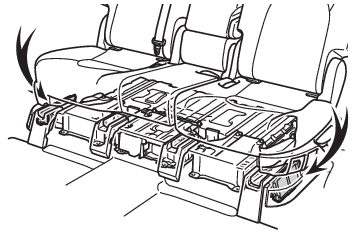
Hybrid battery (traction battery) air ventsHybrid battery (traction battery) air ventsHybrid battery (traction battery) air intake ventThere are air intake vents under each side of the rear seatback for the purpose of
cooling the hybrid battery (traction battery). If the vent is blocked, charging/discharging
of the hybrid battery (traction battery) may become limited.Notice:Hybrid battery (traction battery) air intake ventDo not place objects that will block the air intake vents. The hybrid battery (traction
battery) may become limited and be damaged.Clean the air intake/discharge vents regularly to prevent the hybrid battery (traction
battery) to be limited.Do not allow liquid or foreign material to enter the air intake vent as this may cause
a short circuit and damage the hybrid battery (traction battery).A filter is installed to the air intake vent. When the filter remains noticeably dirty
even after cleaning the air intake vent, filter cleaning or replacement is recommended.
Refer to Cleaning the hybrid battery (traction battery) air intake vents and filter for details on how to clean the filters.Hybrid system
Emergency shut off systemEmergency shut off systemWhen a certain level of impact is detected by the impact sensor, the emergency shut
off system blocks the high voltage current and stops the fuel pump to minimize the
risk of electrocution and fuel leakage. If the emergency shut off system activates,
your vehicle will not restart. To restart the hybrid system, contact your Toyota dealer.Traction battery (hybrid battery)
Warning messageHybrid battery (traction battery)
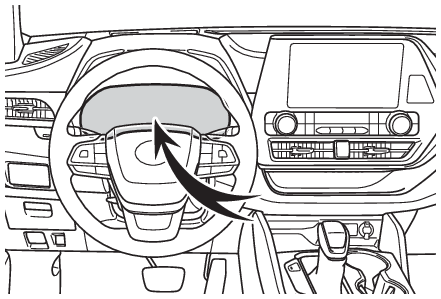
Warning messageHybrid warning messageA message is automatically displayed when a malfunction occurs in the hybrid system
or an improper operation is attempted.If a warning message is shown on the multi-information display, read the message and
follow the instructions. (If a warning message is displayed)Note:If a warning light comes on, a warning message is displayed, or the 12-volt battery
is disconnectedThe hybrid system may not start. In this case, try to start the system again. If the
“
READY” indicator does not come on, contact your Toyota dealer.