Emergency, in case of
If you have a flat tireFlat tire
Vehicles with a spare tireReplacing
TiresSpare tireTires
If you have a flat tireTires
ReplacingTires
Spare tireIf you have a flat tireYour vehicle is equipped with a spare tire. The flat tire can be replaced with the
spare tire.For details about tires: TiresWarning:If you have a flat tireDo not continue driving with a flat tire.Driving even a short distance with a flat
tire can damage the tire and the wheel beyond repair, which could result in an accident.Before jacking up the vehicleStop the vehicle in a safe place on a hard, flat surface.Set the parking brake.Shift the shift lever to P.Stop the engine.Turn on the emergency flashers. (Emergency flashers)For vehicles with power back door: Turn off the power back door system. (Customizable features)Jack
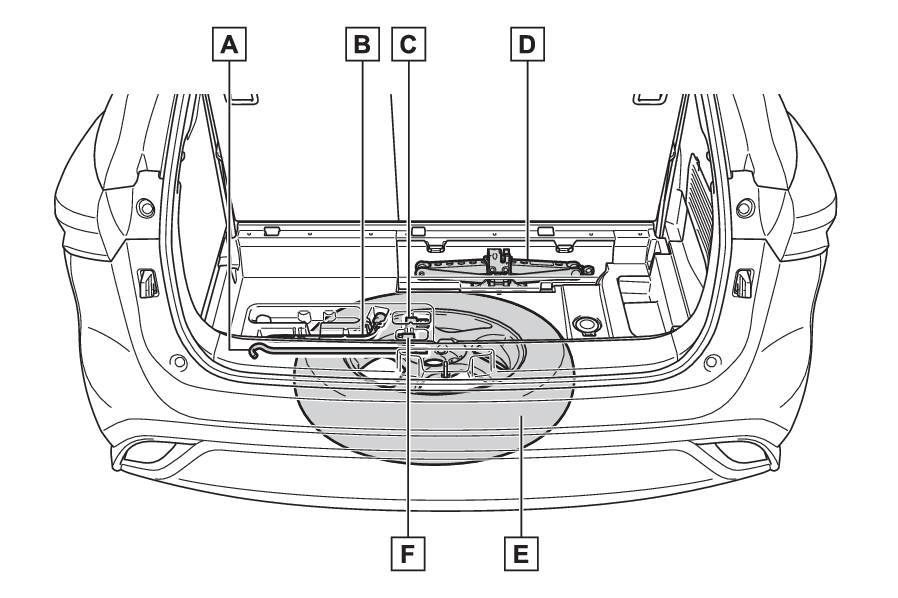
Vehicle-equipped jackJack handleToolsSpare tire
Storage locationLocation of the spare tire, jack and toolsJack handleWheel nut wrenchAdapter socketJackSpare tireWheel lock key (if equipped)Warning:Using the tire jackObserve the following precautions.Improper use of the tire jack may cause the vehicle
to suddenly fall off the jack, leading to death or serious injury.Do not use the tire jack for any purpose other than replacing tires or installing
and removing tire chains.Only use the tire jack that comes with this vehicle for replacing a flat tire.Do not
use it on other vehicles, and do not use other tire jacks for replacing tires on this
vehicle.Put the jack properly in its jack point.Do not put any part of your body under the vehicle while it is supported by the jack.Do not start the engine or drive the vehicle while the vehicle is supported by the
jack.Do not raise the vehicle while someone is inside.When raising the vehicle, do not put an object on or under the jack.Do not raise the vehicle to a height greater than that required to replace the tire.Use a jack stand if it is necessary to get under the vehicle.When lowering the vehicle, make sure that there is no-one near the vehicle. If there
are people nearby, warn them vocally before lowering.Wheel lock nut (if equipped)When replacing tires on a vehicle with wheel lock nuts, use the following procedures
to remove and install the wheel lock nuts. The wheel lock key is stored in the tray
inside the luggage compartment. Always return the wheel lock key to its original position
after use, so that it does not get lost. (Location of the spare tire, jack and tools)RemovalFor ease of removal, the wheel lock nut should always be the first one loosened.Place the wheel lock key on top of the wheel lock nut, turning until the wheel lock
key and wheel lock nut patterns engage.Place the wheel nut wrench on the wheel lock key, and while applying pressure on the
wheel lock key, loosen the wheel lock nut.InstallationFor ease of installation, the wheel lock nut should always be the last one tightened.By hand, install a wheel lock nut on each wheel.Place the wheel lock key on top of the wheel lock nut, turning until the wheel lock
key and wheel lock nut patterns engage.Place the wheel nut wrench on the wheel lock key, and while applying pressure on the
wheel lock key, tighten the wheel lock nut to the recommended torque.Notice:When using a wheel lock key (if equipped)Do not use an impact wrench. Using an impact wrench may cause permanent damage to
wheel lock nut and wheel lock key. If in doubt about wheel lock application, contact
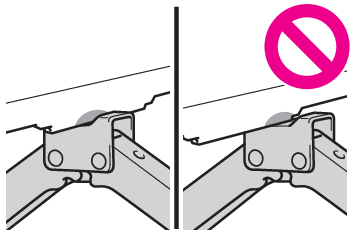
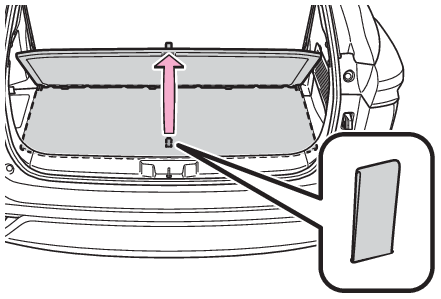
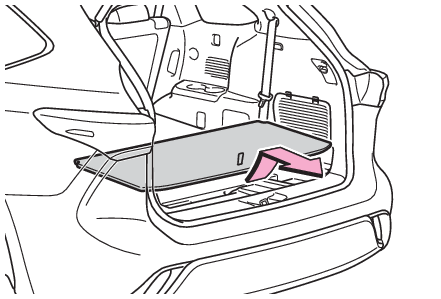
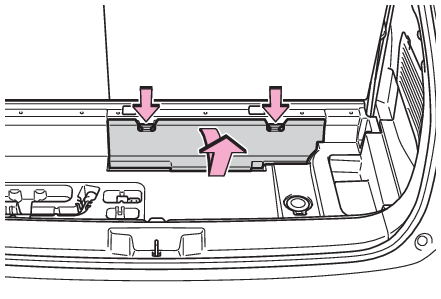
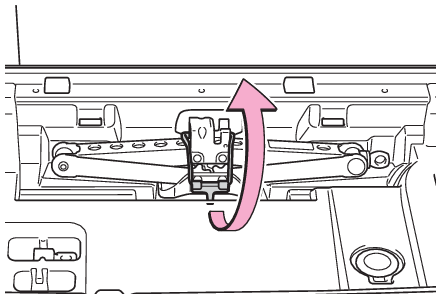
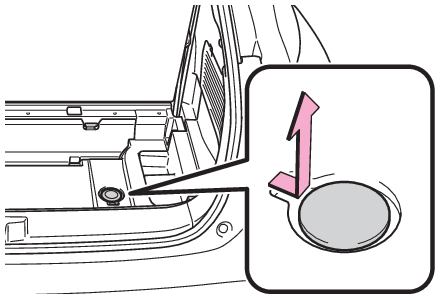
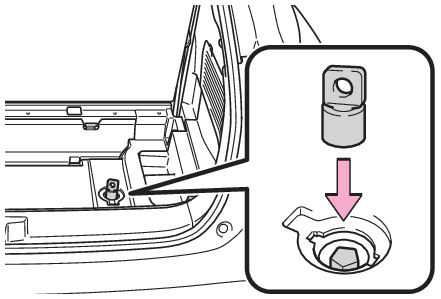
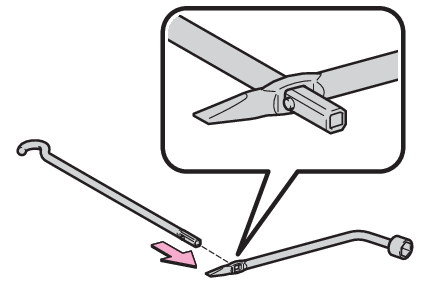
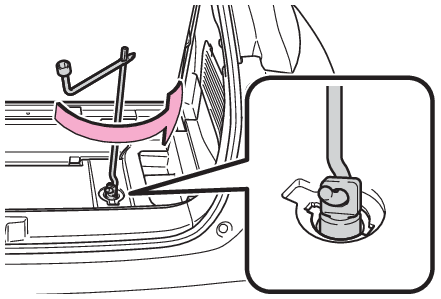
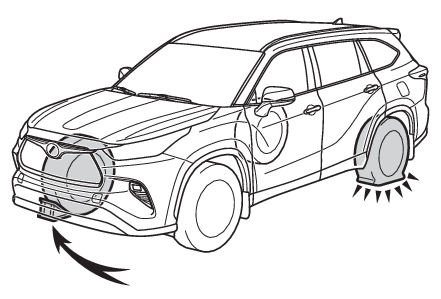
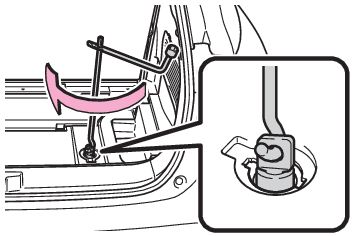
your Toyota dealer.Taking out the jackPull the strap upwards and open the center deck board.Remove the center deck board.Remove the jack cover.Remove the jack after removing the hook.Taking out the spare tirePull the strap upwards and open the center deck board.Remove the center deck board.Remove the cover.If it is difficult to remove the cover, you can use your key.Attach the adapter socket to the spare tire clamp bolt.Connect the jack handle extension to the jack handle.Check that the extension is locked in place by the button.Connect the jack handle to the adapter socket. Turn the jack handle counterclockwise.The tire will be lowered completely to the ground.Turn the jack handle slowly to lower the spare tire. If the handle is turned quickly,
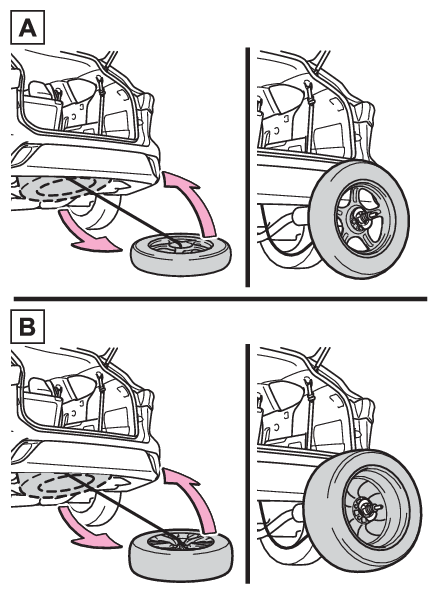
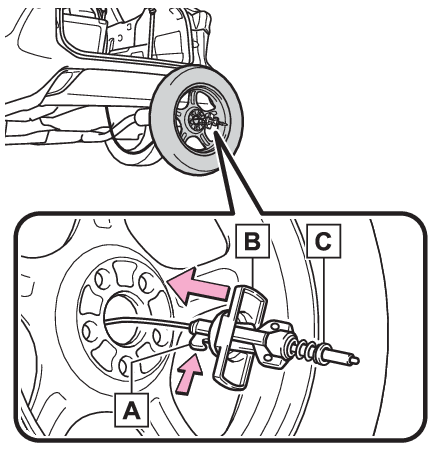
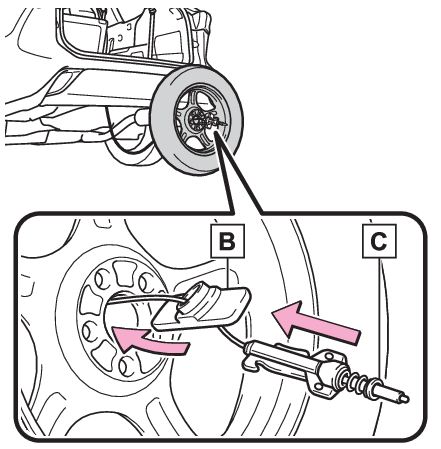
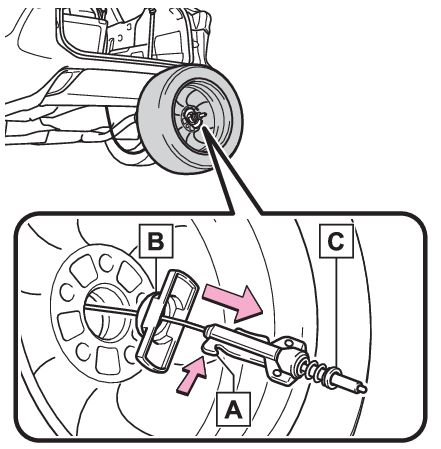
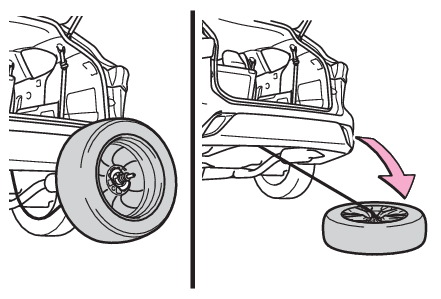
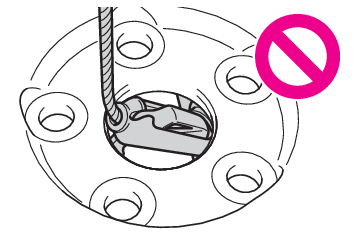
the wire cable may slip off of the shaft inside the unit and the tire may not be lowered.If the spare tire cannot be lowered: If the spare tire cannot be loweredPull out the spare tire and stand it against the bumper.With a compact spare tireWith a full-size spare tireVehicles with a compact spare tireFully depress the secondary latch
and remove the holding bracket
from the hoist assembly
.Tilt the bracket
and pass it through the wheel opening. Then remove the hoist assembly
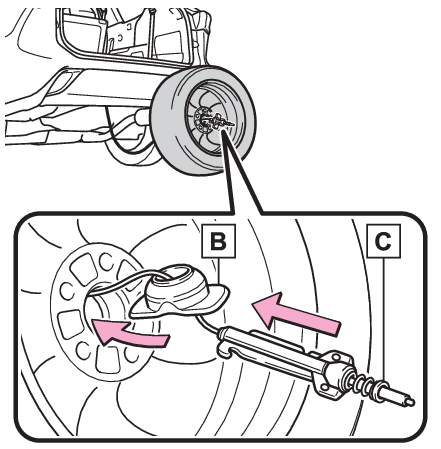
.Vehicles with a full-size spare tireFully depress the secondary latch
and remove the holding bracket
from the hoist assembly
.Tilt the holding bracket
so that it can easily be passed through the wheel opening. After passing the holding
bracket through the wheel opening, remove the hoist assembly
.Warning:When storing the spare tireBe careful not to catch fingers or other body parts between the spare tire and the
body of the vehicle.Replacing a flat tireChock the tires.
Flat tire
Wheel chock positions
Front left-hand side
Behind the rear right-hand side tire
Front right-hand side
Behind the rear left-hand side tire
Rear left-hand side
In front of the front right-hand side tire
Rear right-hand side
In front of the front left-hand side tire
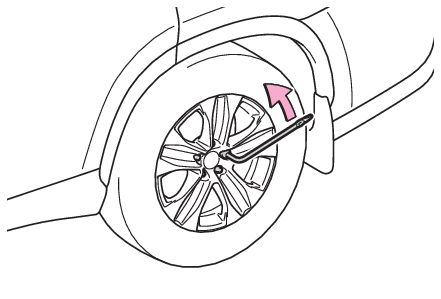
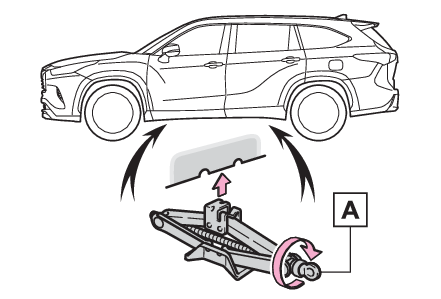
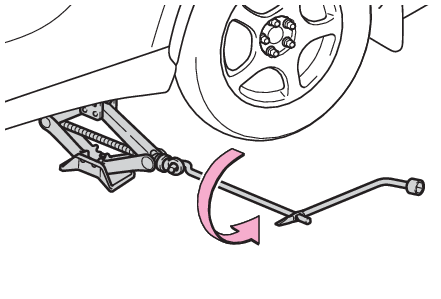
Slightly loosen the wheel nuts (one turn).Vehicles with wheel locks: Use the wheel lock key to loosen the wheel lock.Turn the tire jack portion
by hand until the notch of the jack is in contact with the jack point.The jack point guides are located under the rocker panel. They indicate the jack point
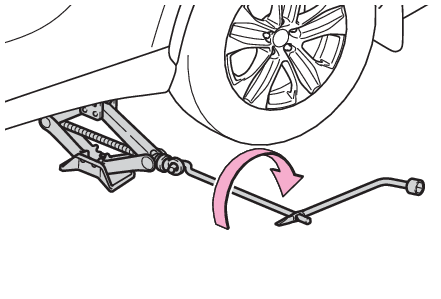
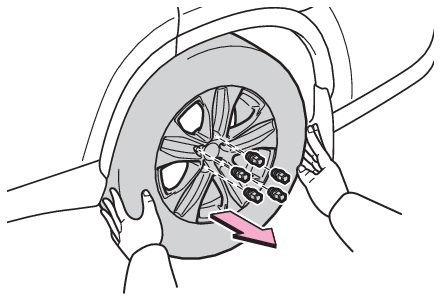
positions.Raise the vehicle until the tire is slightly raised off the ground.Remove all the wheel nuts and the tire.When resting the tire on the ground, place the tire so that the wheel design faces
up to avoid scratching the wheel surface.Note:If the spare tire cannot be loweredIf the spare tire cannot be lowered, it may not have been stowed properly. Perform
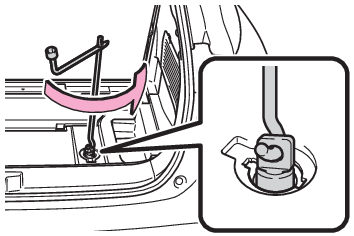
the following procedure:Fully tighten the spare tire clamp bolt by turning the jack handle clockwise until
two clicks are heard and the jack handle skips.Turn the jack handle counterclockwise to lower the spare tire.If the spare tire still cannot be lowered, attempt to fully tighten the spare tire
clamp bolt again by turning the jack handle clockwise. Then turn it counterclockwise
at least 2 turns to lower the spare tire.If the spare tire still cannot be lowered, the wire cable may be severed. Have the
vehicle inspected by your Toyota dealer.Warning:Replacing a flat tireDo not touch the disc wheels or the area around the brakes immediately after the vehicle
has been driven.After the vehicle has been driven the disc wheels and the area around
the brakes will be extremely hot. Touching these areas with hands, feet or other body
parts while changing a tire, etc. may result in burns.Failure to follow these precautions could cause the wheel nuts to loosen and the tire
to fall off, resulting in death or serious injury.Never use oil or grease on the wheel bolts or wheel nuts.Oil and grease may cause
the wheel nuts to be excessively tightened, leading to bolt or disc wheel damage.
In addition, the oil or grease can cause the wheel nuts to loosen and the wheel may
fall off, causing an accident and resulting in death or serious injury. Remove any
oil or grease from the wheel bolts or wheel nuts.Have the wheel nuts tightened with a torque wrench to 76 ft•lbf (103 N•m, 10.5 kgf•m)
as soon as possible after changing wheels.When installing a tire, only use wheel nuts that have been specifically designed for
that wheel.If there are any cracks or deformations in the bolt screws, nut threads or bolt holes
of the wheel, have the vehicle inspected by your Toyota dealer.Do not attach a heavily damaged wheel ornament, as it may fly off the wheel while
the vehicle is moving.Observe the following precautions.Failure to do so may result in serious injury:Do not try to remove the wheel ornament by hand. Take due care in handling the ornament
to avoid unexpected personal injury.Lower the spare tire completely to the ground before removing it from under the vehicle.Replacing a flat tire for vehicles with power back doorIn cases such as when replacing tires, make sure to turn off the power back door main
switch (Customizable features). Failure to do so may cause the back door to operate unintentionally if the power
back door switch is accidentally touched, resulting in hands and fingers being caught
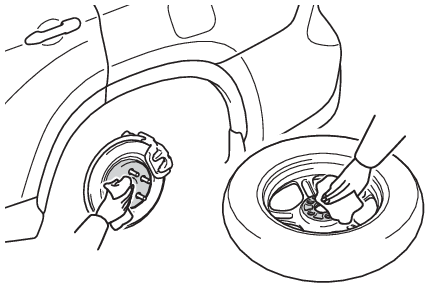
and injured.Installing the spare tireRemove any dirt or foreign matter from the wheel contact surface.If foreign matter is on the wheel contact surface, the wheel nuts may loosen while
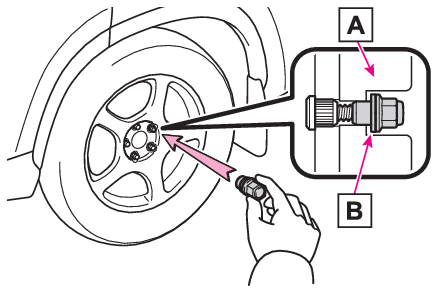
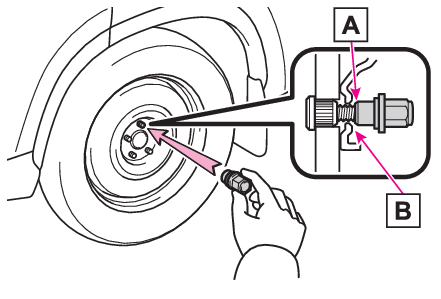
the vehicle is in motion, causing the tire to come off.Install the spare tire and loosely tighten each wheel nut by hand by approximately
the same amount.When replacing an aluminum wheel with an aluminum wheel, turn the wheel nuts until
the washers
come into contact with the disc wheel
.When replacing an aluminum wheel with a steel wheel, tighten the wheel nuts until
the tapered portion
comes into loose contact with the disc wheel seat
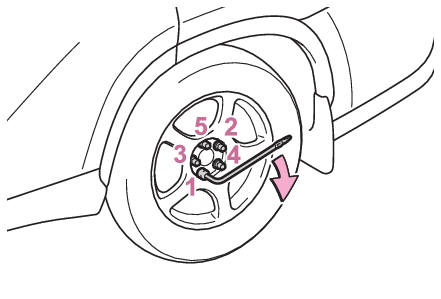
.Lower the vehicle.Firmly tighten each wheel nut two or three times in the order shown in the illustration.Vehicles with wheel locks: Tighten the wheel lock using the wheel lock key after tightening
the other wheel nuts.Tightening torque:76 ft•lbf (103 N•m, 10.5 kgf•m)Warning:Stowing the flat tireFailure to follow steps listed under stowing the tire may result in damage to the
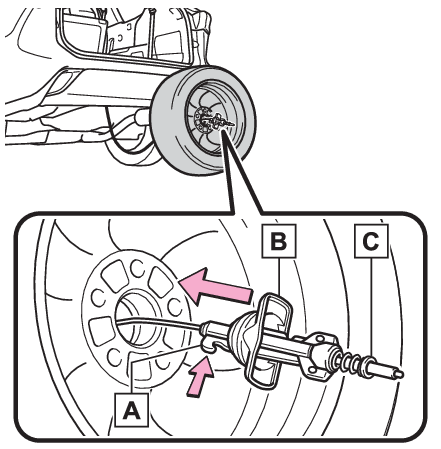
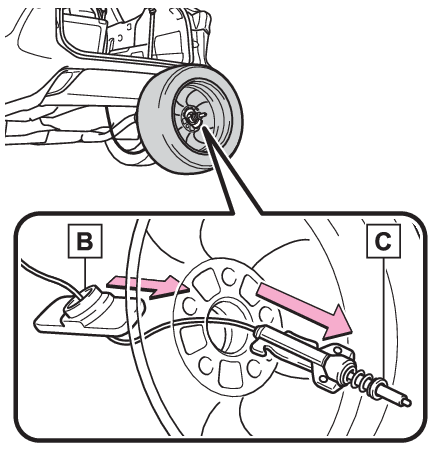
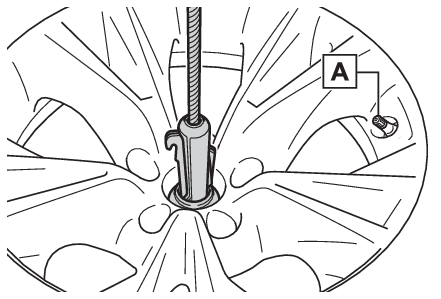
spare tire carrier and loss of the tire, which could result in serious injury or death.Stowing the flat tire, jack and all toolsRemove the center wheel ornament by pushing from the reverse side.Be careful not to lose the wheel ornament.Stand the tire against the bumper with the inner surface facing toward you. Pass the
hoist assembly
and holding bracket
through the wheel opening.Fully depress the secondary latch
and install the bracket
to the hoist assembly
.Lay the tire on the ground with the outer surface (valve stem) facing up.Before raising the tire, make sure that the hoist assembly is perpendicular to the
wheel opening. (Try to place the tire directly beneath the vehicle, near where the
wire cable is hanging from.)Valve stemUsing the jack handle and adapter socket, tighten the tire clamp bolt by turning it
clockwise until the tire is in the correct position and two clicks are heard as the
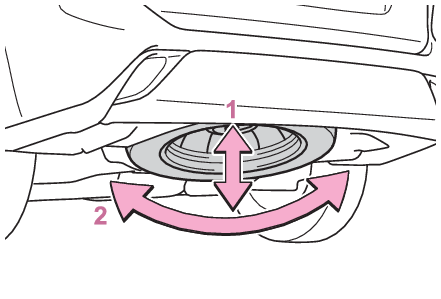
jack handle skips.Confirm it is not loose after tightening:Push and pull the tireTry rotatingVisually check to ensure tire is not hung on surrounding parts.If looseness or misassembly
exists, repeat steps 2 to 7.Repeat step 7, any time the tire is lowered or disturbed.Stow the jack and all tools.Note:The compact spare tire (vehicles with a compact spare tire)The compact spare tire is identified by the label “TEMPORARY USE ONLY” on the tire
sidewall. Use the compact spare tire temporarily, and only in an emergency.Make sure to check the tire inflation pressure of the compact spare tire. (Tires and wheels)When using the compact spare tire (vehicles with a compact spare tire)As the compact spare tire is not equipped with a tire pressure warning valve and transmitter,
low inflation pressure of the spare tire will not be indicated by the tire pressure
warning system. Also, if you replace the compact spare tire after the tire pressure
warning light comes on, the light remains on.When the compact spare tire is equipped (vehicles with a compact spare tire)When driving with the compact spare tire installed, the vehicle height will be different
than when driving with standard tires.If you have a flat front tire on a road covered with snow or ice (vehicles with a
compact spare tire)Install the compact spare tire on one of the rear wheels of the vehicle. Perform the
following steps and fit tire chains to the front tires:Replace a rear tire with the compact spare tire.Replace the flat front tire with the tire removed from the rear of the vehicle.Fit tire chains to the front tires.Warning:When using the compact spare tire (vehicles with a compact spare tire)Remember that the compact spare tire provided is specifically designed for use with
your vehicle. Do not use your compact spare tire on another vehicle.Do not use more than one compact spare tire simultaneously.Replace the compact spare tire with a standard tire as soon as possible.Avoid sudden acceleration, abrupt steering, sudden braking and shifting operations
that cause sudden engine braking.When the compact spare tire is attached (vehicles with a compact spare tire)The vehicle speed may not be correctly detected, and the following systems may not
operate correctly:ABS & Brake assistVSCTRACEPSDynamic radar cruise control with full-speed rangePCS (Pre-Collision System)LTA (Lane Tracing Assist)RSA (Road Sign Assist) (if equipped)Automatic High BeamAFS (Adaptive Front-lighting System) (if equipped)Tire pressure warning systemIntuitive parking assist (if equipped)PKSB (Parking Support Brake) (if equipped)Toyota parking assist monitor (if equipped)Panoramic view monitor (if equipped)BSM (Blind Spot Monitor) (if equipped)RCTA (if equipped)Navigation system (if equipped)Also, not only can the following system not be utilized fully, but it may even negatively
affect the drive-train components:AWD system (AWD models)Speed limit when using the compact spare tire (vehicles with a compact spare tire)Do not drive at speeds in excess of 50 mph (80 km/h) when a compact spare tire is
installed on the vehicle.The compact spare tire is not designed for driving at high speeds. Failure to observe
this precaution may lead to an accident causing death or serious injury.After using the tools and jackBefore driving, make sure all the tools and jack are securely in place in their storage
location to reduce the possibility of personal injury during a collision or sudden
braking.Notice:Be careful when driving over bumps with the compact spare tire installed on the vehicle
(vehicles with a compact spare tire)The vehicle becomes lower when driving with the compact spare tire compared to when
driving with standard tires. Be careful when driving over uneven road surfaces.Driving with tire chains and the compact spare tire (vehicles with a compact spare
tire)Do not fit tire chains to the compact spare tire. Tire chains may damage the vehicle
body and adversely affect driving performance.When replacing the tiresWhen removing or fitting the wheels, tires or the tire pressure warning valve and
transmitter, contact your Toyota dealer as the tire pressure warning valve and transmitter
may be damaged if not handled correctly.When stowing the flat tireEnsure that there is no object caught between the tire and the vehicle underbody.Securely tighten the spare tire clamp bolt to hold the spare wheel carrier by the
hook.Stow the flat tire in the spare tire location. Failure to do so may cause damage to
the spare tire carrier. Proper storage reduces the possibility of injury in a collision
or during sudden braking.Have the flat tire repaired and the spare tire replaced with it as soon as possible.Proper storage of the spare tireIf the hoist assembly is slanted when stowing a tire, the hoist assembly may become
stuck in the wheel opening and the tire may not be raised properly, causing damage
to the wheel or the wire cable.Do not attempt to turn the spare tire clamp bolt without a tire on the hoist assembly,
as doing so may cause the wire cable to slip off of the shaft inside the unit and
the wire cable may not be able to be raised or lowered. If the spare tire clamp bolt
has been turned without a tire on the hoist assembly and the wire cable cannot be
raised or lowered, contact your Toyota dealer.